Finding legitimate job openings in the U.S. can feel overwhelming, especially when online scams are increasingly common. However, with the right information, it becomes easier to separate real opportunities from risky offers. Therefore, understanding how the U.S. job market works is essential before applying.
At the same time, many people rely on job boards, social media, and messaging apps to find work. While these tools are useful, they also attract fraudulent recruiters. Because of this, job seekers must know what to trust and what to avoid from the start.
Moreover, employment scams often target people who urgently need income. They use attractive promises and vague descriptions. As a result, recognizing early warning signs can protect your time, money, and personal data.
For that reason, this article explains how to identify legitimate job openings in the U.S., where to search safely, and how to confirm that a job offer is real. Continue reading to learn practical steps that help you move forward with confidence and make informed decisions.
What Are Legitimate Job Openings in the U.S.
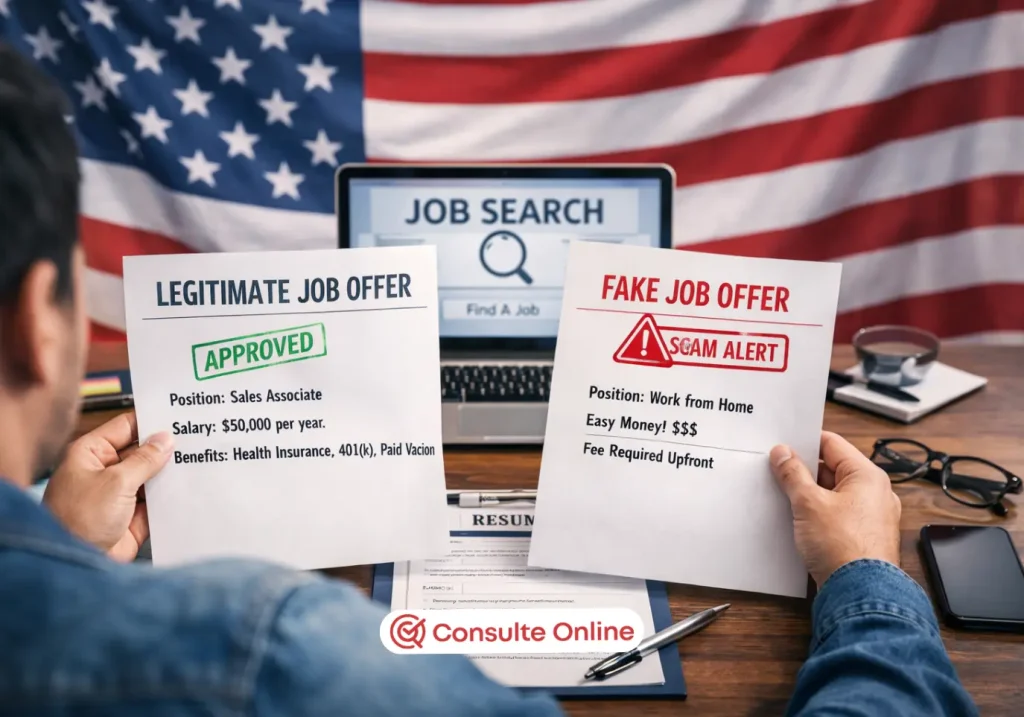
Legitimate job openings in the U.S. are positions offered by registered companies or organizations that follow federal and state labor laws. These employers provide clear job descriptions, legal contracts, and transparent payment terms.
In addition, real job postings usually include verifiable company information. This may involve a physical address, an official website, and corporate contact details. Therefore, transparency is one of the first indicators of legitimacy.
Another key point is compliance. Legitimate employers follow minimum wage laws, overtime rules, and anti-discrimination policies. Because of this, job offers that ignore legal standards should raise concern.
Finally, authentic job openings never require upfront payments. If money is requested to secure a position, the offer is almost always fraudulent.
Why Job Scams Are So Common in the U.S.
Job scams are common because online recruitment is fast and accessible. Anyone can post a job ad, which makes it easier for scammers to operate. As a result, fake listings often appear alongside real ones.
Additionally, scammers exploit economic uncertainty. When people urgently need work, they may overlook red flags. Consequently, emotional pressure becomes a powerful tool for fraud.
Another factor is remote work. While remote jobs are legitimate, they are also frequently used as bait. Therefore, offers promising easy work with high pay deserve careful review.
Furthermore, technology allows scammers to impersonate real companies. They may copy logos, emails, and job descriptions. Because of this, verification is essential at every step.
Most Common Types of Employment Scams
Fake Job Postings
These scams involve ads for positions that do not exist. Often, they collect personal information. Then, that data may be misused or sold.
Advance Fee Scams
In this case, applicants are asked to pay for training, equipment, or background checks. Legitimate employers do not charge candidates.
Check or Payment Scams
Some scammers send fake checks and ask for refunds. Eventually, the check fails, and the victim loses money.
Impersonation Scams
Scammers pretend to represent well-known companies. However, communication usually comes from unofficial email addresses.
Where to Find Legitimate Job Openings in the U.S.
Finding real jobs starts with using trusted platforms. Official and reputable sources significantly reduce risk.
Government Job Portals
Government websites list verified job opportunities and employment guidance. One example is U.S. Department of Labor, which provides job search resources and worker protections.
Another reliable platform is USA.gov, which directs users to official employment services.
Reputable Job Boards
Well-known job boards invest in fraud prevention. They monitor listings and remove suspicious ads. However, users should still verify employers independently.
Company Career Pages
Applying directly on a company’s official website is one of the safest methods. This ensures the job posting is genuine and current.
Local Workforce Centers
State and local workforce agencies help connect job seekers with verified employers. These centers also offer resume and interview support.
How to Verify Legitimate Job Openings in the U.S.
Verification is critical before sharing personal information or accepting an offer.
Check the Employer’s Identity
Search for the company’s official website. Compare job details with the information published there. Consistency indicates legitimacy.
Review Contact Information
Legitimate employers use professional email domains. Free email services are rarely used for official hiring.
Confirm Job Details
Real job offers include clear duties, wages, and schedules. Vague descriptions often signal fraud.
Research Online Reviews
Look for reviews from employees or applicants. While opinions vary, repeated complaints are a warning sign.
Red Flags That Indicate Job Scams
Being aware of warning signs helps prevent losses.
- Requests for payment
- Pressure to act immediately
- Promises of guaranteed income
- Interviews conducted only via text
- Requests for sensitive data early
If any of these appear, it is safer to stop communication.
How Legitimate Employers Conduct Hiring
Understanding normal hiring practices helps identify what is real.
Structured Application Process
Legitimate employers require resumes, applications, and sometimes interviews. The process is clear and professional.
Formal Interviews
Interviews may be virtual or in person. However, they involve real conversations, not automated scripts.
Written Job Offers
Real offers are provided in writing and include terms of employment. They allow time for review.
Protecting Your Personal Information
Protecting data is as important as finding a job.
- Never share Social Security numbers early
- Avoid sending copies of documents before verification
- Use secure platforms for communication
Therefore, caution should always come first.
What to Do If You Encounter a Job Scam
If you suspect fraud, take action immediately.
- Stop communication
- Do not send money
- Report the scam to authorities
The Federal Trade Commission accepts scam reports and provides guidance.
Table: Legitimate Job vs Scam Comparison
| Criteria | Legitimate Job | Scam Job |
|---|---|---|
| Payment Requests | None | Required upfront |
| Company Info | Verifiable | Vague or missing |
| Interview Process | Structured | Informal or rushed |
| Communication | Professional | Urgent and generic |
| Job Offer | Written and detailed | Verbal or unclear |
Legenda: Key criteria to help distinguish legitimate job offers from common employment scams.
Why Education Is the Best Defense
Education empowers job seekers. When people understand hiring norms, scams become easier to spot. Therefore, learning is a long-term investment.
Additionally, sharing knowledge helps others. Communities that communicate reduce scam success rates.
Finally, confidence grows when job seekers feel informed. This leads to better decisions and safer outcomes.
Legitimate Job Openings in the U.S. and Long-Term Career Safety
Building a career requires patience and verification. While quick offers may seem attractive, real opportunities focus on sustainability.
Moreover, employers value candidates who ask questions. This shows professionalism and awareness.
As a result, taking time to verify jobs protects not only finances but also future career prospects.
Conclusion: How to Move Forward Safely
Finding legitimate job openings in the U.S. is possible with the right approach. By using trusted sources, verifying employers, and recognizing red flags, job seekers can avoid scams and focus on real opportunities. Therefore, caution, research, and patience remain the strongest tools in any job search.
Relevant Links for Further Reading
- U.S. Department of Labor – Employment and Workers’ Rights
- USA.gov – Jobs and Unemployment
- Federal Trade Commission – Job Scams and Employment Fraud
- CareerOneStop – Job Search and Training (Sponsored by U.S. Department of Labor)
- State Workforce Agencies – Official Employment Offices by State
📌 Read also:
Free Forklift Operator Certification How to Enroll in Free IT Courses Free Welding Courses in the US👉 Continue reading Consulte Online

