Finding your first job in the United States can feel overwhelming. However, with the right preparation, interviews become more manageable. This guide focuses on interview tips for first job seekers who want to understand what employers really expect. Moreover, it explains each step clearly. As a result, you can feel more confident from the start.
Many entry-level candidates worry about lacking experience. However, U.S. employers often value attitude, communication, and willingness to learn. Therefore, interviews focus on potential as much as skills. In addition, recruiters look for reliability and basic professionalism.
If this is your first interview, nerves are normal. Still, preparation changes everything. When you know what to expect, anxiety decreases. Consequently, you can focus on presenting yourself clearly and calmly. This article breaks the process into simple steps.
Keep reading to learn practical strategies used by successful candidates across the U.S. job market. These insights are realistic, current, and based on official guidance. Continue reading to understand how to prepare effectively and move forward with confidence.
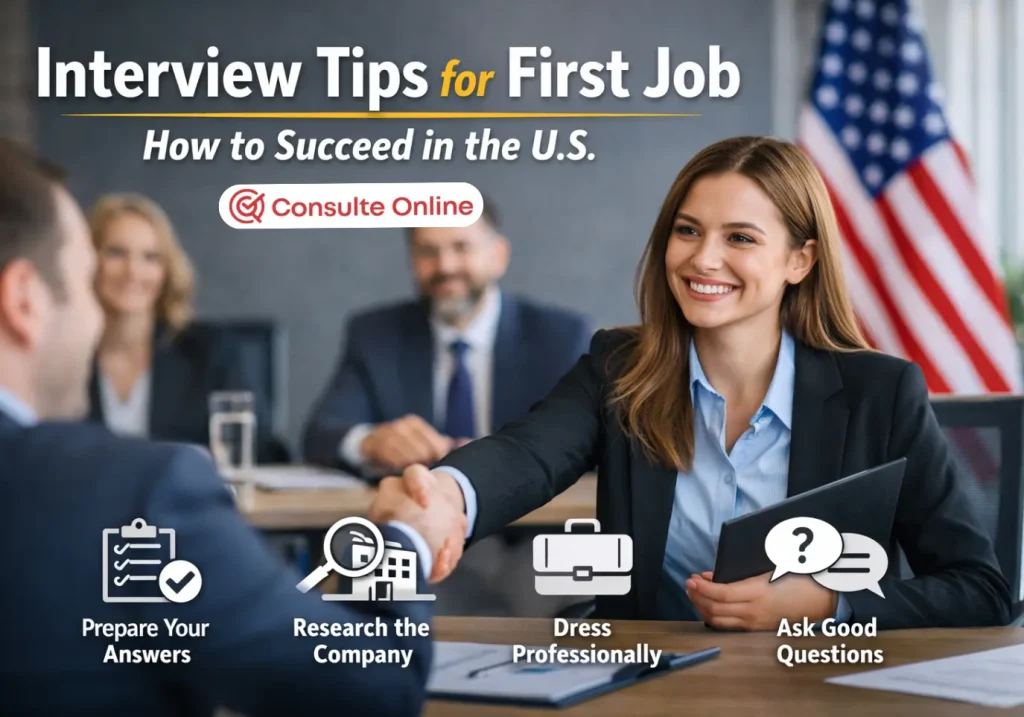
Interview Tips for First Job: Understanding the U.S. Interview Process
The interview process in the United States follows fairly standard patterns. However, details vary by industry and company. Generally, interviews aim to assess communication, basic skills, and cultural fit.
Most entry-level interviews start with a brief introduction. Then, the interviewer asks behavioral or situational questions. Finally, candidates often have a chance to ask questions.
Common interview formats include:
- Phone or video screening
- One-on-one interviews
- Panel interviews
- Short assessments or tasks
Although formats differ, expectations remain similar. Employers want clarity, honesty, and professionalism. Therefore, understanding the structure helps reduce surprises.
What Employers Expect From Entry-Level Candidates
Entry-level roles are designed for beginners. Therefore, employers do not expect deep experience. Instead, they focus on foundational qualities.
Typical expectations include:
- Clear communication
- Punctuality and organization
- Basic problem-solving ability
- Willingness to learn
- Positive attitude
Moreover, recruiters evaluate how candidates handle questions. Even simple answers show thinking style and responsibility. Consequently, preparation matters more than experience.
According to guidance aligned with labor standards promoted by the U.S. Department of Labor, employers emphasize readiness and professionalism for early-career roles.
Interview Tips for First Job: How to Prepare Before the Interview
Preparation begins days before the interview. First, research the company. Understand its mission, products, and culture. This shows interest and seriousness.
Next, review the job description carefully. Identify key skills mentioned. Then, think of examples from school, volunteering, or projects that match those skills.
Important preparation steps include:
- Reviewing your resume line by line
- Preparing short answers about your background
- Practicing common interview questions
- Planning your outfit in advance
Additionally, plan logistics. Know the interview location or video platform. Test your technology if remote. As a result, you avoid unnecessary stress.
How to Answer Common Entry-Level Interview Questions
Many first-time interviews use predictable questions. However, answers should feel natural and honest.
Common questions include:
- “Tell me about yourself”
- “Why do you want this job?”
- “What are your strengths?”
- “Describe a challenge you faced”
When answering, use simple structure. Start with context. Then, explain actions. Finally, describe outcomes. This approach keeps responses clear.
If you lack work experience, use examples from:
- School projects
- Group assignments
- Volunteering
- Internships
- Part-time or temporary work
Employers understand that everyone starts somewhere. Therefore, clarity matters more than perfection.
Professional Behavior During the Interview
Professional behavior strongly influences interview outcomes. Even small details matter.
Key behaviors include:
- Arriving early or logging in on time
- Maintaining eye contact
- Listening carefully before answering
- Speaking clearly and calmly
Additionally, body language communicates confidence. Sit upright. Avoid distractions. Show attentiveness. These signals help interviewers feel comfortable with you.
Respectful behavior also includes honesty. If you do not know something, say so calmly. Then, express willingness to learn. This approach builds trust.
Interview Tips for First Job: What to Wear and How to Present Yourself
Appearance influences first impressions. However, it does not require expensive clothing. Clean, simple, and appropriate attire works best.
General guidelines include:
- Business casual for most entry-level roles
- Neutral colors and minimal accessories
- Clean shoes and well-groomed appearance
For virtual interviews, lighting and background matter. Choose a quiet space. Use neutral backgrounds. Dress fully, even if only visible from the waist up.
Presentation also includes communication style. Speak respectfully. Avoid slang. Use complete sentences. These habits demonstrate maturity and readiness.
Questions You Should Ask the Interviewer
Asking questions shows engagement. Moreover, it helps you evaluate the role.
Appropriate questions include:
- “What does a typical day look like?”
- “How is performance evaluated?”
- “What training is provided?”
- “What are the next steps in the process?”
Avoid questions about salary or benefits unless invited. Early interviews focus on fit and expectations. Therefore, keep questions professional and role-focused.
Handling Rejection and Following Up
Not every interview leads to an offer. However, each experience builds skill. Therefore, view interviews as learning opportunities.
After the interview, send a brief thank-you message. Express appreciation for the opportunity. Reaffirm interest. Keep it short and polite.
If rejected, reflect calmly. Identify areas to improve. Practice more. Apply again. Persistence matters in early careers.
Employment guidance from agencies like the U.S. Equal Employment Opportunity Commission emphasizes fair hiring practices. Therefore, rejection often reflects fit rather than personal failure.
Building Confidence Over Time
Confidence grows with exposure. The more interviews you attend, the more comfortable you become.
Ways to build confidence include:
- Practicing mock interviews
- Recording practice answers
- Seeking feedback from mentors
- Improving communication skills
Additionally, staying informed about worker rights helps confidence. Resources aligned with the USA.gov provide reliable information for job seekers.
Confidence does not mean perfection. Instead, it reflects preparation and self-awareness.
Conclusion: Preparing for Your First Job Interview
Starting your career involves learning and adjustment. Interviews are part of that journey. By preparing thoughtfully, you reduce uncertainty and increase clarity.
These interview tips for first job candidates focus on realistic expectations. They emphasize preparation, communication, and professionalism. Over time, these habits support long-term career growth.
Approach each interview as practice and progress. With consistency and patience, opportunities follow.
Relevant Links for Further Reading
- U.S. Department of Labor – Employment Resources: https://www.dol.gov
- USA.gov – Working in the United States: https://www.usa.gov/jobs
- U.S. Equal Employment Opportunity Commission – Job Applicants: https://www.eeoc.gov
📌 Read also:
Free Forklift Operator Certification How to Enroll in Free IT Courses Free Welding Courses in the US👉 Continue reading Consulte Online

