Introduction
Finding a job online has become easier. However, at the same time, job scams have become more sophisticated. As a result, many job seekers in the United States face real risks when applying for positions online. Therefore, knowing how to identify job scams is no longer optional. It is essential.
In many cases, fake job listings look professional. They often use real company names. They may also include attractive salaries and flexible schedules. Because of this, even experienced professionals can fall into traps if they are not careful.
For this reason, learning how to identify job scams helps protect your personal data. It also prevents financial loss. More importantly, it saves time and emotional stress during an already challenging job search process.
So, if you want to apply with confidence and avoid dangerous mistakes, continue reading. This guide explains the key warning signs clearly and step by step, so you can make safer decisions throughout your job search.
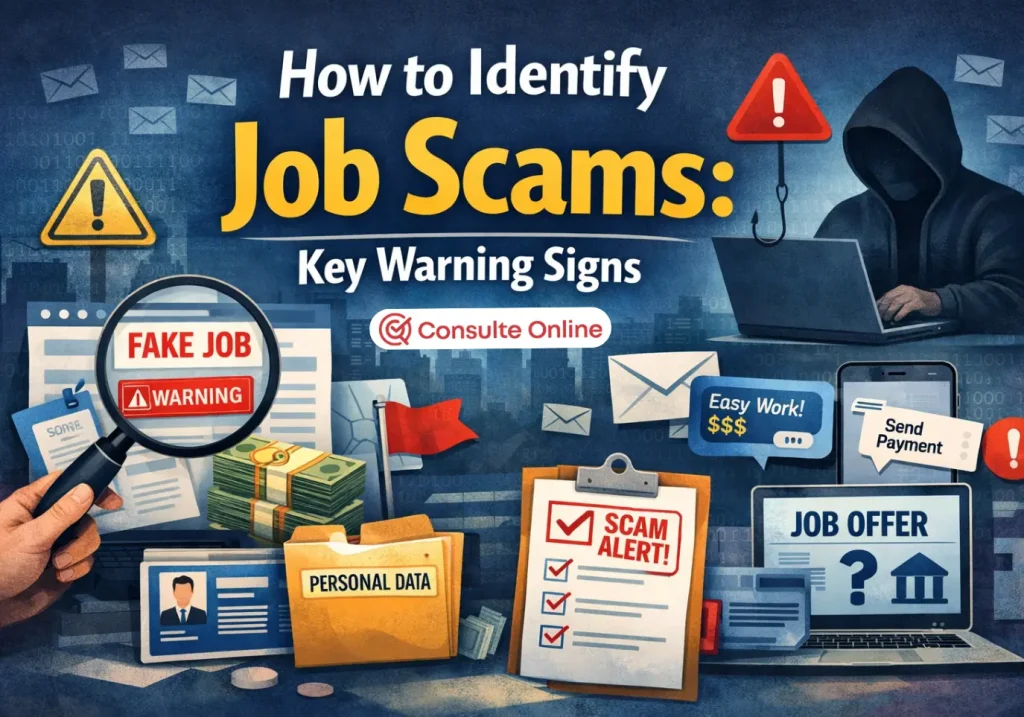
How to Identify Job Scams: Understanding the Real Risk
Before looking at warning signs, it is important to understand why job scams exist and how they operate. Scammers target job seekers because they often feel urgency. They also trust professional communication.
Fake job listings usually promise easy hiring. They may offer high pay with minimal requirements. In addition, they often avoid standard hiring procedures. Because of this, recognizing patterns is the first defense.
Moreover, scammers adapt quickly. They follow trends such as remote work, freelance platforms, and international hiring. Therefore, staying informed is critical.
Why job scams are increasing
Several factors contribute to the rise of job scams. First, remote work has expanded rapidly. Second, online job boards allow fast posting. Third, social media messaging makes direct contact easier.
As a result, scammers can reach thousands of job seekers in minutes. They can also disappear just as fast. This makes prevention more important than recovery.
Who scammers usually target
Although anyone can be affected, certain groups face higher risk. These include remote job seekers, entry-level candidates, unemployed professionals, and people searching through social media platforms.
However, awareness reduces vulnerability. Therefore, education remains the strongest protection.
Common Red Flags in Fake Job Listings
Recognizing red flags early helps you avoid scams before damage occurs. While no single sign confirms fraud, multiple signs together indicate danger.
Unrealistic salary offers
One of the clearest warning signs is unusually high pay for minimal experience. If a job promises high income with little effort, caution is necessary.
Legitimate employers base compensation on market rates. They also explain salary ranges clearly. Scammers, however, use inflated numbers to attract attention quickly.
Vague job descriptions
Another red flag involves unclear responsibilities. Fake listings often avoid specifics. They may use generic phrases without explaining daily tasks.
In contrast, real job postings describe duties, expectations, and performance metrics. Therefore, lack of detail should raise concern.
Immediate job offers
If you receive an offer without an interview, be careful. Legitimate employers follow structured hiring processes. They assess skills through interviews, tests, or references.
Scammers skip these steps. They aim to move quickly before you question legitimacy.
Communication Warning Signs You Should Never Ignore
Beyond job descriptions, communication style reveals important clues. Many scams fail because of inconsistent or unprofessional messaging.
Poor grammar and spelling
Although minor errors can happen, frequent mistakes indicate risk. Professional companies review official communication carefully.
Therefore, repeated errors, strange phrasing, or inconsistent formatting deserve attention.
Use of personal email addresses
Legitimate employers usually contact candidates using company domains. Emails from generic providers like Gmail or Yahoo may indicate fraud.
However, some small businesses use personal emails. So, always verify the company independently.
Pressure tactics
Scammers create urgency. They may say positions are limited or require immediate action. This pressure reduces your time to evaluate.
In contrast, real employers respect reasonable response times.
How to Identify Job Scams Through Payment Requests
One of the strongest indicators of fraud involves money requests. Understanding this point alone prevents many scams.
Requests for upfront fees
Legitimate employers never ask for payment to secure a job. Any request for application fees, training fees, or equipment purchases is suspicious.
This includes requests for gift cards, cryptocurrency, or wire transfers.
Fake check scams
Some scams involve sending you a check to buy equipment. Later, the check bounces. Meanwhile, you already sent money back.
Therefore, never accept funds from unknown employers.
Protecting Your Personal Information
Another major risk involves identity theft. Job scams often aim to collect sensitive information.
Requests for personal data too early
Employers may request personal details only after formal hiring steps. Requests for Social Security numbers, IDs, or bank details early in the process are dangerous.
Therefore, always confirm legitimacy before sharing information.
Suspicious application forms
Fake forms may look official. However, they often ask unnecessary questions. Always review what information is requested and why.
How to Verify Job Offers and Employers
Verification reduces risk significantly. Fortunately, several steps help confirm legitimacy.
Research the company independently
Search the company name online. Visit the official website. Compare contact information.
If details do not match, reconsider proceeding.
Check official business records
In the United States, legitimate companies usually appear in state business databases. Lack of records raises questions.
Contact the company directly
If unsure, contact the company using official website contact details. Ask whether the job listing is real.
Trusted Authorities That Warn About Job Scams
Several official organizations provide updated guidance on employment fraud. Reviewing their resources helps stay informed.
- Federal Trade Commission provides consumer alerts and reporting tools
- FBI Internet Crime Complaint Center tracks online scams and trends
- Better Business Bureau offers scam reports and business verification
Using these resources strengthens your defense against fraud.
How to Identify Job Scams on Social Media
Social platforms are common scam channels. While many employers recruit legitimately, scams also spread quickly.
Direct messages offering jobs
Unsolicited messages promising jobs deserve caution. Especially if no application was submitted.
Always verify profiles. Look for official pages and consistent activity.
Fake recruiter profiles
Scammers often copy real recruiter names. However, profile details may be incomplete or recently created.
Therefore, verify identities before continuing conversations.
Steps to Take If You Encounter a Job Scam
If you suspect fraud, action matters.
Stop communication immediately
Do not respond further. Avoid clicking links or sending information.
Report the scam
Report incidents to job platforms and official agencies. Reporting helps protect others.
Monitor your accounts
If you shared information, monitor bank and credit activity. Early detection limits damage.
Building Safe Job Search Habits
Prevention improves with habits. Developing safe routines reduces risk long term.
Use reputable job boards
Well-known platforms invest in security. Although not perfect, they reduce exposure.
Keep records of applications
Tracking where you apply helps identify unexpected contacts.
Trust your instincts
If something feels wrong, pause. Legitimate opportunities withstand scrutiny.
Conclusion: Staying Safe While Job Hunting Online
Protecting Yourself Starts With Awareness
Learning how to identify job scams empowers job seekers. While scammers continue to evolve, awareness remains effective.
By recognizing warning signs, verifying employers, and using official resources, you protect your time, finances, and identity.
Job searching should feel hopeful, not stressful. With the right knowledge, you can move forward confidently and safely.
Relevant Links for Further Reading
- Federal Trade Commission – Employment scams
https://consumer.ftc.gov/articles/job-scams - FBI Internet Crime Complaint Center – Job scam reporting
https://www.ic3.gov/Media/Y2023/PSA230406 - Better Business Bureau – Employment scam alerts
https://www.bbb.org/all/scamstudies/employment
📌 Read also:
Entry-Level Job Requirements Jobs in the US for Beginners Online Job Application USA👉 Continue reading Consulte Online

