Factory jobs in the United States continue to attract thousands of people every year. These roles offer steady income, predictable schedules, and, in many cases, strong benefits. For many workers, especially those without advanced degrees, factory employment represents a practical path to stability.
At the same time, the manufacturing sector keeps evolving. Automation has changed tasks, but it has not eliminated the need for human labor. On the contrary, many factories actively look for reliable workers who can learn quickly and adapt to structured environments.
Because of that, understanding how factory hiring works is essential. Knowing what employers expect, where to find openings, and how to apply correctly can make a real difference. Small details often decide who gets hired first.
If you want to improve your chances and understand the process clearly, this guide will help you. Continue reading to learn how factory jobs work in the United States and what steps can move you closer to getting hired.
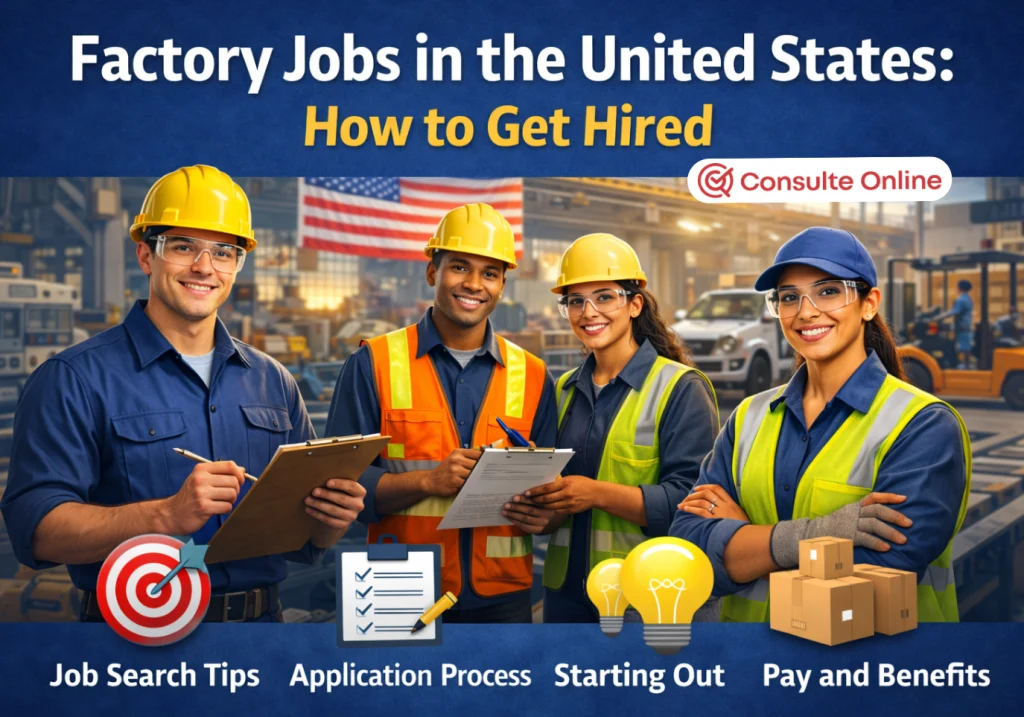
Factory jobs in the United States: what these roles really involve
Factory jobs in the United States cover a wide range of tasks. While job titles may vary, most roles focus on production, assembly, packaging, or quality control. In general, workers follow standardized procedures and safety rules.
Most factories operate on shifts. Therefore, employees may work mornings, afternoons, nights, or rotating schedules. Although this structure may feel demanding, it also creates consistent hours and predictable pay.
Common responsibilities include:
- Operating basic machinery
- Assembling parts or products
- Monitoring production lines
- Packaging finished goods
- Inspecting items for quality issues
In many facilities, teamwork plays a major role. Workers coordinate with supervisors and coworkers to keep production moving smoothly. As a result, communication and reliability matter as much as physical ability.
Types of factory jobs available across the U.S.
The manufacturing sector is broad. Because of that, factory jobs in the United States exist in many industries. Each industry has slightly different requirements, although the hiring process often follows similar patterns.
Here are the most common categories:
| Industry Type | Typical Roles | Key Skills Needed |
|---|---|---|
| Food and Beverage | Packaging, machine operator | Attention, hygiene |
| Automotive | Assembly worker, inspector | Precision, stamina |
| Electronics | Line worker, tester | Focus, basic tech skills |
| Plastics and Chemicals | Production assistant | Safety awareness |
| Warehousing and Distribution | Sorting, labeling | Speed, organization |
Legend: Common industrial sectors, typical entry-level roles, and key skills required.
Although some positions require experience, many entry-level roles provide on-the-job training. Therefore, lack of experience does not automatically disqualify candidates.
Who can apply for factory jobs in the United States
One major advantage of factory jobs in the United States is accessibility. Many employers prioritize availability and willingness to work over formal education.
In general, applicants must meet the following criteria:
- Be legally authorized to work in the U.S.
- Be at least 18 years old
- Be able to stand for long periods
- Follow safety rules consistently
In addition, some factories require background checks or drug screenings. These requirements depend on the industry and the employer.
While English proficiency helps, some factories offer multilingual environments. As a result, non-native speakers often find opportunities, especially in large manufacturing hubs.
Why factory jobs remain in high demand
Manufacturing continues to play a vital role in the U.S. economy. According to data tracked by the U.S. Bureau of Labor Statistics, millions of workers remain employed in production-related roles.
Several factors keep demand high:
- Ongoing consumer demand for goods
- Expansion of domestic manufacturing
- High turnover rates in entry-level positions
- Retirement of experienced workers
Because of these factors, factories frequently hire throughout the year. This continuous need creates opportunities for new applicants, especially those ready to start quickly.
Where to find factory jobs in the United States
Knowing where to search saves time and effort. Many openings never appear on social media, but they are consistently posted on reliable platforms.
The most common places include:
- Online job boards
- Staffing agencies
- Company career pages
- Local employment centers
Websites like Indeed and Glassdoor regularly list factory jobs across states. In addition, large manufacturers often publish openings directly on their websites.
Staffing agencies also play a major role. Many factories prefer temporary-to-permanent hiring. This model allows employers to evaluate workers before offering long-term contracts.
How the hiring process usually works
Understanding the hiring steps reduces uncertainty. While details vary, the process often follows a similar structure.
First, candidates submit an application. This may include basic personal information and work history. In many cases, resumes are optional for entry-level roles.
Next, employers may conduct a brief interview. This interview often focuses on availability, reliability, and willingness to follow rules. Technical questions are rare for entry-level positions.
After that, selected candidates complete pre-employment checks. These may include:
- Identity verification
- Employment eligibility verification
- Drug testing
- Safety orientation
Once cleared, new hires usually start within days. Because factories value speed, delays are uncommon when documents are ready.
What employers look for in factory workers
Although factory jobs in the United States are accessible, employers still look for specific traits. These traits help ensure smooth operations and reduce turnover.
Key qualities include:
- Punctuality
- Attention to detail
- Ability to follow instructions
- Physical endurance
- Willingness to learn
Experience matters less than attitude. In fact, many supervisors prefer workers who show consistency rather than those with long resumes.
Therefore, during interviews, emphasizing reliability and flexibility often increases hiring chances.
How to prepare before applying
Preparation improves confidence and outcomes. Even simple steps can make a difference.
Before applying, consider the following:
- Gather identification documents
- Review availability for different shifts
- Prepare a short explanation of past work
- Wear appropriate clothing for interviews
Additionally, understanding basic safety concepts helps. Many factories prioritize workplace safety, so awareness shows responsibility.
While preparation does not guarantee hiring, it positions candidates more favorably compared to unprepared applicants.
Entry-level factory jobs and training opportunities
Many people start with entry-level roles. These positions often require no prior experience and include training.
Training usually covers:
- Equipment operation
- Safety procedures
- Workflow processes
- Quality standards
Training periods vary. Some last a single day, while others extend over several weeks. During this time, supervisors monitor performance and provide feedback.
Because of training, motivated workers often advance quickly. Promotions to lead roles or specialized positions are common within the first year.
Pay rates and benefits you can expect
Pay varies by state, industry, and shift. However, factory jobs in the United States often offer competitive hourly wages compared to other entry-level roles.
Typical compensation elements include:
- Hourly pay
- Overtime opportunities
- Shift differentials
- Health insurance
- Paid time off
Night shifts and weekend schedules often pay more. In addition, overtime during peak seasons can significantly increase earnings.
Benefits vary by employer. Full-time positions usually offer more comprehensive packages than temporary roles.
States with the highest concentration of factory jobs
Manufacturing clusters exist across the country. Certain states consistently report higher employment levels.
Common manufacturing states include:
- California
- Texas
- Ohio
- Michigan
- Pennsylvania
These states host automotive plants, food processing facilities, and logistics hubs. As a result, job availability remains strong year-round.
Relocation may increase options. However, many local opportunities exist even in smaller cities.
Challenges of factory work to consider
While factory jobs offer stability, they also come with challenges. Being aware of these realities helps set realistic expectations.
Common challenges include:
- Repetitive tasks
- Physical demands
- Strict schedules
- Noise levels
However, many workers adapt over time. Proper safety equipment and breaks help reduce physical strain.
Understanding both advantages and challenges leads to better job satisfaction.
How to stand out during the application process
Standing out does not require complex strategies. Simple actions often create positive impressions.
Consider these tips:
- Apply early when listings appear
- Follow application instructions carefully
- Respond quickly to calls or messages
- Show flexibility with shifts
Additionally, maintaining a positive attitude during interviews matters. Employers value workers who contribute to a cooperative environment.
Consistency and responsiveness often matter more than experience.
Advancement opportunities in manufacturing
Factory jobs in the United States can serve as long-term careers. Many workers progress into higher-paying roles.
Common advancement paths include:
- Team lead positions
- Machine technician roles
- Quality control specialists
- Supervisory roles
Some employers also offer tuition assistance or certification programs. These programs help workers develop technical skills.
Over time, manufacturing careers can provide financial growth and job security.
Conclusion: building a path through factory jobs
Factory jobs in the United States remain a reliable option for many workers. They offer accessibility, consistent income, and opportunities for growth. While the work can be demanding, preparation and understanding improve outcomes.
By knowing where to search, what employers expect, and how the hiring process works, applicants can move forward with confidence. With the right approach, factory work can become a stable foundation for long-term employment.
Relevant links for further reading
- U.S. Bureau of Labor Statistics – Manufacturing and Production Jobs
- U.S. Bureau of Labor Statistics – Production Occupations Overview
- USA.gov – Find a Job in the United States
- Indeed – Factory and Manufacturing Jobs in the United States
- Glassdoor – Manufacturing Jobs and Salaries in the U.S.
📌 Read also:
Entry-Level Job Requirements Jobs in the US for Beginners Online Job Application USA👉 Continue reading Consulte Online

