Working in a new country is never simple. However, many immigrants arrive every year and still manage to build a life. This guide explains, in a realistic way, how work in the USA without English is possible. It focuses on real-life situations, avoids shortcuts, and also avoids promises that don’t match reality.
First, it is important to understand that English fluency is not always required at the beginning. Many jobs in the United States depend more on physical effort, consistency, and responsibility. Because of that, thousands of people start working even before learning basic English.
Second, the U.S. labor market is large and flexible. As a result, employers often need workers urgently. Therefore, they prioritize availability and reliability. In many cases, communication is visual and repetitive. Over time, language skills grow naturally.
Now, if you want to understand where to start, what jobs are realistic, and how to avoid mistakes, keep reading. This guide explains clear paths, real industries, and safe strategies. Continue reading to understand how small steps can create real stability.
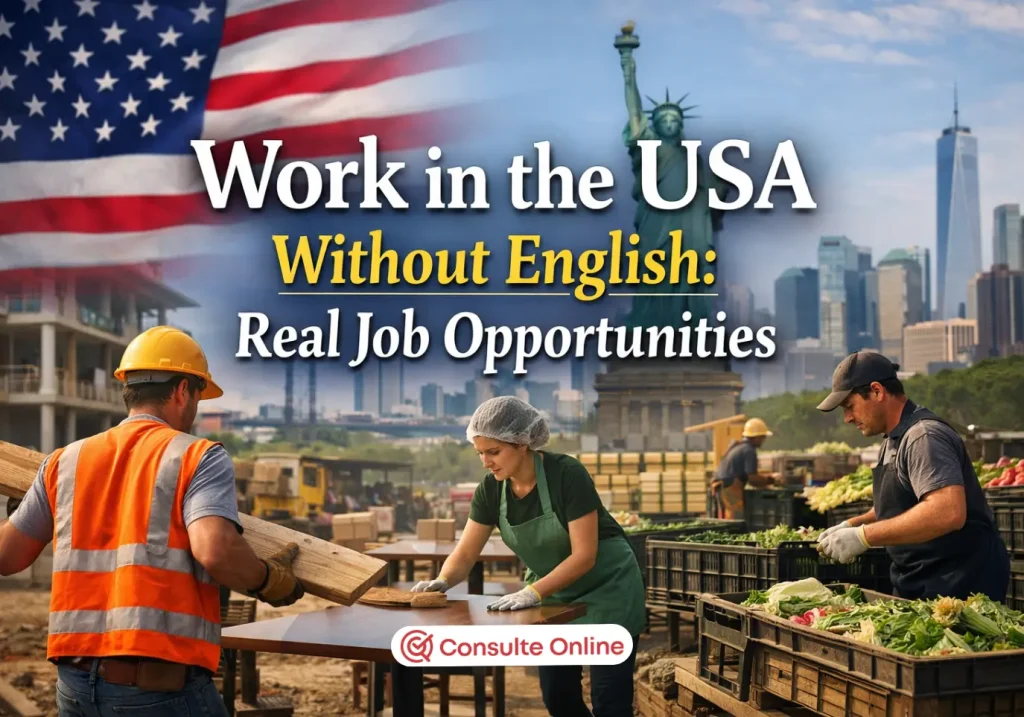
Understanding the Reality: Work in the USA Without English
Working without English is challenging. However, it is common. Many immigrants begin their journey this way. They start with simple tasks. They learn by observing. Gradually, they adapt.
In many workplaces, communication is functional. Instructions are repeated daily. Because of that, workers memorize actions instead of words. Over time, understanding improves naturally.
Moreover, entire sectors rely on immigrant labor. These sectors already expect language barriers. Therefore, supervisors use demonstrations, signs, and routines. This reduces confusion.
However, expectations must remain realistic. High-paying office jobs usually require English. On the other hand, entry-level and manual jobs often do not. Knowing this difference avoids frustration.
Industries Where English Is Not Always Required
Construction and General Labor
Construction remains one of the most accessible industries. Many job sites are multilingual. In fact, entire crews often communicate in Spanish or other languages.
Workers usually start as helpers. Tasks include carrying materials, cleaning areas, and assisting skilled workers. Because tasks are physical and visual, English is less critical.
Additionally, construction offers growth. With time, workers specialize. They learn trades. Income increases. This progression often happens before full English fluency.
Cleaning and Janitorial Services
Cleaning jobs are widely available. Offices, schools, hotels, and residential buildings all need regular cleaning.
These jobs often involve working alone or in small teams. Instructions are simple. Schedules are predictable. Therefore, communication remains minimal.
Moreover, many cleaners eventually work independently. They find clients through referrals. This creates flexibility and control over income.
Warehousing and Logistics
Warehouses operate with structured systems. Workers scan items. They follow numbers, colors, and labels.
Because tasks repeat, learning is fast. Many warehouses provide basic training using demonstrations. Some also offer translated safety instructions.
In addition, warehouses often operate night shifts. These shifts require less communication. Therefore, they attract many non-English speakers.
Food Preparation and Kitchens
Restaurants constantly hire kitchen staff. These roles are behind the scenes.
Dishwashers, prep cooks, and kitchen assistants focus on routine tasks. Communication is short and repetitive.
Many kitchens already function with multilingual teams. New workers adapt quickly by watching others. Experience gained here transfers easily to other restaurants.
Agriculture and Seasonal Work
Seasonal agricultural work employs thousands of workers each year. Tasks include harvesting, packing, and sorting produce.
Teams usually stay together. Commands remain consistent. Because of that, workers memorize instructions quickly.
Sometimes, employers provide housing. This reduces initial expenses. However, work is physically demanding and seasonal.
Jobs That Commonly Do Not Require English
| Job Type | English Level | Hiring Speed |
|---|---|---|
| Cleaner | None to basic | Fast |
| Construction helper | Basic | Fast |
| Warehouse worker | None to basic | Medium |
| Dishwasher | None | Fast |
| Farm laborer | None | Seasonal |
Legend: English requirements and typical hiring speed for common entry-level jobs.
This overview shows that language is not always the main requirement.
How to Find These Jobs Safely
Local Community Networks
Community centers, churches, and immigrant associations play a major role. They share job leads. They also share warnings.
Because information spreads locally, scams are identified faster. This protects newcomers from exploitation.
Additionally, these networks often help with basic guidance about paperwork and rights.
Staffing Agencies
Staffing agencies place workers quickly. Many specialize in labor jobs.
They often provide bilingual support. This helps during onboarding. Payment is usually weekly.
However, it is essential to confirm legitimacy. Real agencies never charge fees to workers.
Walking In and Asking
In some neighborhoods, walking in works. Restaurants, cleaning companies, and small businesses still hire this way.
Timing matters. Mornings are better. Confidence and politeness matter more than language.
Showing availability often creates opportunities.
Online Platforms
Online job platforms offer convenience. However, caution is necessary.
Never pay to apply. Always verify company information. If an offer sounds unrealistic, it usually is.
Legal Considerations You Must Understand
Work Authorization
Working legally requires authorization. This may include work permits or specific visas.
Working without authorization carries risks. Therefore, understanding your situation is essential.
Seeking legal guidance prevents long-term problems.
Taxes and Identification
Many workers use an Individual Taxpayer Identification Number to pay taxes.
Paying taxes creates records. These records may help in future legal processes.
How to Communicate at Work Without English
Communication develops through repetition. Workers hear the same words daily.
Learning job-specific terms helps significantly. Translation apps also assist.
In addition, body language and observation fill gaps. Reliability builds trust faster than words.
Improving Your Situation Over Time
Learning Basic English Gradually
- Learning does not need to be fast. Consistency matters more.
- Focusing on safety words and job-related terms improves confidence.
- Free classes are often available in communities.
Moving to Better Roles
- Experience leads to better roles. Employers reward reliability.
- With time, pay increases. Benefits may follow.
- Language then becomes a tool for growth.
Common Mistakes to Avoid
- Paying for fake job offers
- Sharing documents with strangers
- Accepting unsafe conditions
Walking away is sometimes the safest decision.
Realistic Expectations About Pay
- Entry-level wages vary by state. Many start near minimum wage.
- Overtime increases income. Experience improves pay.
- Budgeting carefully is essential during the first months.
Why Employers Hire Without English
- Employers face labor shortages. Reliability matters.
- Training reliable workers is easier than constant replacement.
- Language can be learned. Consistency cannot.
Long-Term Benefits of Starting This Way
- Starting small builds experience. Experience builds trust.
- U.S. work history opens doors.
- Stability grows gradually.
Conclusion: Work in the USA Without English
A Real Path Forward
Starting to work in the USA without English is difficult. However, it is possible. Many immigrants begin this way. They choose realistic jobs, learn gradually and improve step by step.
The key is patience. Avoid shortcuts. Focus on safety and consistency. Over time, opportunities expand and stability becomes real.
Relevant Links for Further Reading
- U.S. Department of Labor – Worker Rights and Wages
https://www.dol.gov - USCIS – Employment Authorization Information
https://www.uscis.gov - IRS – Individual Taxpayer Identification Number
https://www.irs.gov - CareerOneStop – Job Search Resources
https://www.careeronestop.org - USA.gov – Working in the United States
https://www.usa.gov
📌 Read also:
Entry-Level Job Requirements Jobs in the US for Beginners Online Job Application USA👉 Continue reading Consulte Online

