Healthcare Support Job Openings continue to grow across the United States. Because the healthcare system needs more staff every year, many facilities now hire support professionals without requiring a license. As a result, this path has become one of the most accessible ways to enter healthcare. Moreover, it offers stability, structured schedules, and long-term opportunities.
At the same time, hospitals, clinics, and care centers face constant staff shortages. Therefore, employers increasingly focus on skills like reliability, communication, and willingness to learn. In contrast to clinical roles, these positions emphasize operational support rather than medical decision-making. Because of that, formal licensing is often unnecessary.
If you want a stable career but lack certifications, this field deserves attention. In addition, healthcare support roles allow you to gain experience while earning income. Over time, this experience can open doors to advancement. Continue reading to understand how these roles work and what steps to take next.
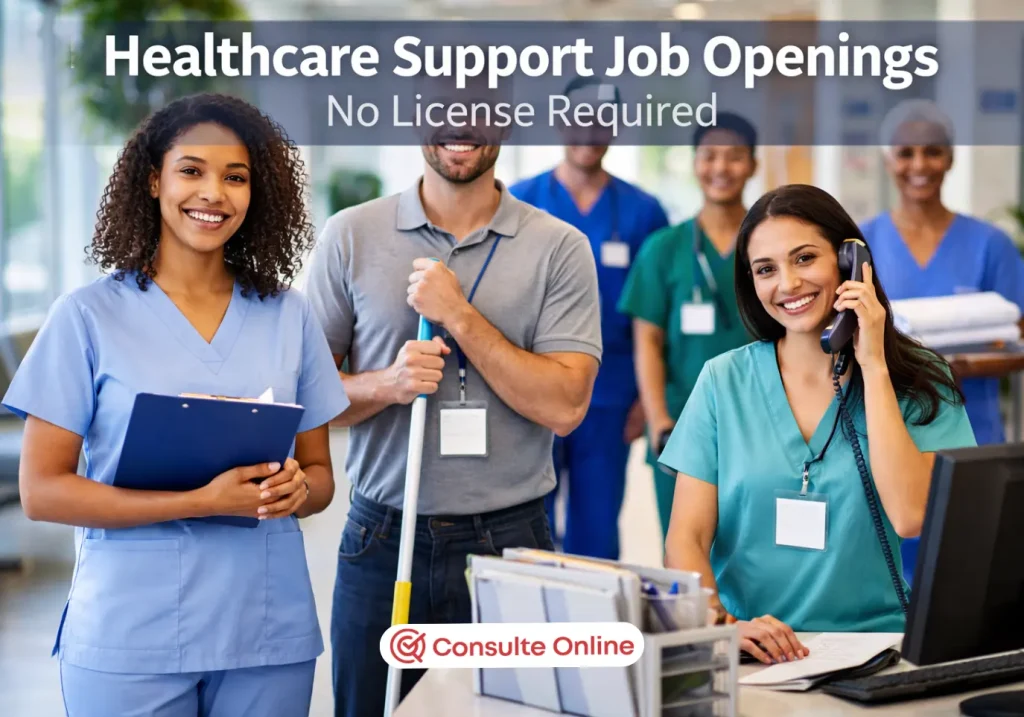
Healthcare Support Job Openings Explained
Healthcare Support Job Openings refer to non-licensed positions that assist medical teams. These roles keep healthcare environments organized, clean, and functional. Although they do not involve direct diagnosis or treatment, they remain essential.
Because healthcare facilities operate around the clock, support staff ensure continuity of care. Furthermore, they allow licensed professionals to focus on patients. Consequently, demand for these roles remains strong nationwide.
Common characteristics of these jobs include on-the-job training, predictable duties, and flexible entry requirements. Therefore, they appeal to individuals seeking fast hiring processes.
Why No License Is Required for Many Healthcare Support Roles
Many healthcare tasks do not require clinical judgment. Instead, they focus on logistics, patient assistance, and administrative support. For this reason, federal and state regulations do not mandate licenses for these roles.
Additionally, employers often provide internal training. This approach ensures staff follow safety protocols and workplace standards. Because of that, prior experience becomes less important.
Moreover, removing licensing barriers helps facilities hire faster. As staffing shortages increase, this strategy remains practical and necessary.
Most Common Healthcare Support Jobs Without a License
Healthcare Support Job Openings cover a wide range of positions. While responsibilities differ, entry requirements remain similar.
| Job Title | Main Responsibilities | Typical Work Setting |
|---|---|---|
| Patient Transporter | Move patients safely | Hospitals |
| Medical Receptionist | Scheduling and records | Clinics |
| Nursing Assistant (Non-Certified) | Basic patient support | Long-term care |
| Environmental Services Worker | Cleaning and sanitation | Hospitals |
| Dietary Aide | Meal preparation and delivery | Care facilities |
Legend: Common entry-level healthcare roles, responsibilities, and typical work environments.
Because these roles focus on support tasks, employers prioritize attitude and availability.
Entry-Level Requirements You Should Expect
Although licenses are not required, basic expectations still exist. Generally, employers look for:
- High school diploma or GED
- Ability to follow instructions
- Physical stamina for standing or lifting
- Basic communication skills
- Background check clearance
However, requirements vary by employer. Therefore, reviewing each posting carefully remains important.
Healthcare Support Job Openings and Career Stability
Healthcare rarely slows down. Because of aging populations and expanding services, demand continues to rise. Consequently, support roles offer consistent employment.
In addition, many healthcare systems promote from within. Therefore, starting in a support role can lead to supervisory or administrative positions. Over time, some workers pursue certifications while employed.
This career stability attracts job seekers who value long-term security.
Work Environments You May Encounter
Healthcare support professionals work in diverse settings. Although hospitals employ many workers, other environments also hire.
Common workplaces include:
- Hospitals
- Outpatient clinics
- Rehabilitation centers
- Nursing homes
- Home healthcare agencies
Each setting has unique routines. Still, training usually prepares workers adequately.
Shift Options and Scheduling Flexibility
Healthcare facilities operate 24/7. Because of this, support roles often offer flexible shifts.
Typical options include:
- Day shifts
- Evening shifts
- Overnight shifts
- Weekend rotations
This flexibility benefits students, parents, and career changers. Moreover, night shifts sometimes offer higher pay.
How Much Do Healthcare Support Jobs Pay
Pay varies based on location, employer, and role. However, healthcare support positions generally provide competitive entry-level wages.
| Role | Average Hourly Pay |
|---|---|
| Patient Transporter | $15 – $20 |
| Medical Receptionist | $16 – $22 |
| Environmental Services | $14 – $19 |
| Dietary Aide | $14 – $18 |
Legend: Average hourly pay ranges for common hospital support roles.
Although starting pay may seem modest, benefits and overtime increase total compensation.
Skills That Improve Hiring Chances
Because licensing is not required, soft skills matter more. Employers consistently value:
- Reliability
- Attention to detail
- Teamwork
- Empathy
- Time management
Additionally, willingness to learn often outweighs experience.
Healthcare Support Job Openings and On-the-Job Training
Most employers provide structured onboarding. This training covers safety procedures, privacy standards, and daily tasks.
Moreover, ongoing training updates staff on compliance rules. Because healthcare regulations evolve, continuous education remains essential.
As a result, workers gain transferable skills useful across facilities.
Advancement Opportunities Within Healthcare Support
Although entry-level, these roles can lead to growth. After gaining experience, workers may pursue:
- Supervisory roles
- Administrative positions
- Certified healthcare roles
Many employers offer tuition assistance. Therefore, long-term career development becomes achievable.
Common Myths About Non-Licensed Healthcare Jobs
Some believe these roles lack importance. However, support staff ensure patient safety and efficiency.
Others assume advancement is impossible. In reality, healthcare organizations value internal promotion.
Understanding these facts helps set realistic expectations.
How to Find Legitimate Healthcare Support Job Openings
Reliable sources improve job search success. Focus on:
- Hospital career pages
- Healthcare system websites
- Government labor portals
- Reputable job boards
Avoid offers requesting fees or sensitive information upfront.
Application Tips for Better Results
To improve chances:
- Tailor resumes to support skills
- Highlight availability and flexibility
- Prepare for behavioral interviews
- Emphasize teamwork experience
Because competition exists, preparation matters.
Healthcare Support Job Openings and Workplace Safety
Safety training protects both staff and patients. Employers enforce protocols for infection control and equipment handling.
Therefore, following procedures remains mandatory.
Diversity and Inclusion in Healthcare Support Roles
Healthcare employers value diversity. Because patient populations vary, inclusive teams improve care quality.
As a result, many organizations actively recruit from diverse backgrounds.
Challenges You Should Be Aware Of
Although rewarding, challenges exist. These may include:
- Physical demands
- Emotional stress
- Irregular schedules
However, supportive management often mitigates these issues.
Healthcare Support Job Openings in Urban vs Rural Areas
Urban areas offer more openings. However, rural facilities often hire faster due to shortages.
Therefore, flexibility in location increases opportunities.
Long-Term Outlook for Healthcare Support Jobs
According to labor projections, healthcare support roles will continue growing. Because healthcare demand increases, these jobs remain future-proof.
This outlook reassures job seekers seeking stability.
Conclusion: Building a Career Through Healthcare Support
Healthcare Support Job Openings provide accessible entry into a resilient industry. Because licensing is not required, barriers remain low. At the same time, career stability and advancement potential remain high. With commitment and reliability, these roles can become the foundation of a long-term healthcare career.
Relevant Links for Further Reading
- U.S. Bureau of Labor Statistics – Healthcare Support Occupations
- USA.gov – Healthcare Jobs and Training
- Centers for Disease Control and Prevention (CDC) – Healthcare Worker Safety
- U.S. Department of Health & Human Services – Health Workforce
- Job Search Portal – USAJobs (Federal Healthcare Support Roles)
📌 Read also:
Entry-Level Job Requirements Jobs in the US for Beginners Online Job Application USA👉 Continue reading Consulte Online

