Entry level construction jobs are among the most accessible ways to start working in the United States. For many people, especially those without prior experience, construction offers a practical path into the labor market. Because of that, these roles remain in high demand across cities, suburbs, and growing regions.
Moreover, entry level construction jobs do not usually require formal education. Instead, employers focus on reliability, physical readiness, and willingness to learn. As a result, thousands of workers enter the industry every year through basic roles that provide on-the-job training.
In addition, the construction sector plays a key role in the U.S. economy. Roads, homes, commercial buildings, and infrastructure projects depend on a steady workforce. Therefore, companies consistently look for new workers to fill entry-level positions and support experienced teams. Continue reading to understand how these opportunities work and how to prepare for them.
This guide explains where to find entry level construction jobs, what employers expect, how much you can earn, and how to grow in the industry over time. If you want clear, realistic information, this article will help you make informed decisions. Continue reading to learn the full picture.
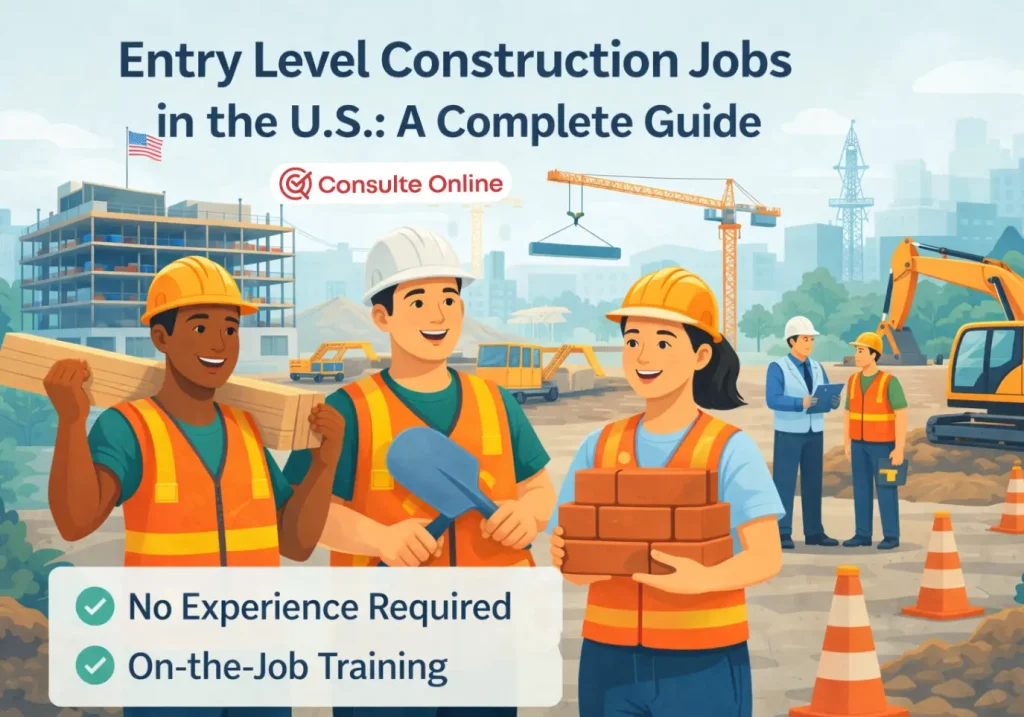
What Are Entry Level Construction Jobs
Entry level construction jobs are positions designed for workers with little or no previous experience. These roles focus on basic tasks that support daily operations on construction sites. Although the work can be physically demanding, it usually comes with direct training.
In most cases, entry level workers assist skilled professionals. For example, they may help carpenters, electricians, or masons. While doing so, they learn essential techniques and safety practices. Over time, this hands-on experience becomes valuable.
Common responsibilities include carrying materials, preparing tools, cleaning work areas, and following instructions. Therefore, attention and consistency matter. Even though these tasks seem simple, they are critical to keeping projects on schedule.
Common Entry Level Construction Job Titles
There are several job titles associated with entry level construction jobs. Each one focuses on specific tasks, although responsibilities often overlap.
- Construction Laborer
- General Laborer
- Construction Helper
- Apprentice Laborer
- Site Assistant
Because titles vary by employer, job descriptions are more important than the name itself. Therefore, reading postings carefully helps you understand expectations before applying.
Who Can Apply for Entry Level Construction Jobs
Entry level construction jobs are open to a wide range of workers. In general, applicants do not need previous experience. However, they must meet basic requirements.
Most employers expect workers to be at least 18 years old. In addition, they often require legal authorization to work in the United States. Physical ability is also important, since tasks may involve lifting, standing, and working outdoors.
Furthermore, some positions require a high school diploma or equivalent, although many do not. What matters more is punctuality, teamwork, and willingness to follow safety rules.
Skills Employers Look For
Even without experience, employers still value certain skills. These skills increase your chances of getting hired and succeeding on the job.
- Basic communication skills
- Ability to follow instructions
- Physical stamina
- Awareness of safety rules
- Teamwork and reliability
While technical skills can be learned later, attitude matters from day one. Therefore, showing commitment during interviews can make a difference.
Do Entry Level Construction Jobs Require Certification
Most entry level construction jobs do not require certifications at the start. However, some certifications improve employability and safety awareness.
For example, the Occupational Safety and Health Administration offers basic safety training. Although not always mandatory, it is often recommended. Employers appreciate candidates who understand job site risks.
In addition, some states or companies require specific safety courses. Therefore, checking local requirements is useful before applying.
Work Environment and Conditions
Construction work environments vary widely. Some projects take place indoors, while others are outdoors. As a result, weather conditions can affect daily routines.
Entry level workers often work full-time schedules. However, overtime is common during peak project phases. Because of that, weekly hours may exceed standard schedules.
Although the work can be physically demanding, safety standards aim to reduce risks. Organizations such as Occupational Safety and Health Administration set guidelines to protect workers. Following these rules is essential on every site.
Average Pay for Entry Level Construction Jobs
Pay for entry level construction jobs depends on location, employer, and project type. According to data from Bureau of Labor Statistics, construction laborers earn competitive wages compared to other entry-level roles.
On average, hourly pay ranges from moderate to solid levels for beginners. In high-demand areas, wages may be higher. In addition, overtime pay can increase total earnings.
While starting wages may not be high, consistent work and experience often lead to raises. Therefore, construction can become financially stable over time.
Benefits Often Offered
Many entry level construction jobs include benefits, especially with established companies. Although benefits vary, common options include:
- Health insurance
- Paid overtime
- Workers’ compensation
- Training opportunities
- Retirement plans for long-term employees
Because benefits depend on the employer, asking during the hiring process is important.
How to Find Entry Level Construction Jobs
Finding entry level construction jobs requires a practical approach. Several methods increase your chances of success.
First, online job boards list thousands of construction openings. Searching with location-specific keywords helps narrow results. In addition, company websites often post openings directly.
Second, local staffing agencies specialize in construction labor. These agencies connect workers with short-term or long-term projects. Therefore, registering with them can lead to fast placement.
Third, networking matters. Asking friends, neighbors, or community members can uncover opportunities that are not advertised.
Applying Without Experience
Applying for entry level construction jobs without experience may seem challenging. However, employers understand that beginners need training.
When applying, focus on transferable skills. For example, previous work that required physical effort, teamwork, or reliability is relevant. In addition, highlighting availability and flexibility helps.
During interviews, showing willingness to learn is critical. Employers value candidates who take safety seriously and follow directions carefully.
Training and On-the-Job Learning
Most entry level construction jobs include on-the-job training. Supervisors demonstrate tasks and monitor progress. Over time, workers gain confidence and efficiency.
Some employers also offer formal training programs. These programs introduce tools, materials, and basic construction methods. As skills grow, responsibilities often increase.
In some cases, workers move into apprenticeships. Apprenticeships combine paid work with structured learning, leading to skilled trade positions.
Career Growth in Construction
Construction offers clear career paths. Entry level roles serve as a foundation for advancement.
With experience, workers may specialize in trades such as carpentry, plumbing, or electrical work. These roles require additional training but offer higher pay.
Others move into supervisory positions. Site supervisors coordinate teams and manage daily operations. Because of experience-based promotion, construction rewards long-term commitment.
Challenges of Entry Level Construction Jobs
Although opportunities are abundant, challenges exist. Physical fatigue is common, especially at the beginning. Therefore, proper rest and hydration are important.
Weather conditions can also be demanding. Outdoor projects expose workers to heat, cold, and rain. However, protective gear helps manage these conditions.
Despite these challenges, many workers find construction rewarding. The sense of accomplishment after completing projects motivates long-term engagement.
Safety in Entry Level Construction Jobs
Safety is a top priority in construction. Entry level workers receive safety briefings before starting tasks. In addition, protective equipment is mandatory.
Common safety gear includes helmets, gloves, and protective footwear. Following safety rules reduces accidents and builds trust with supervisors.
Government agencies like the U.S. Department of Labor oversee workplace standards. Their regulations aim to protect all workers, especially beginners.
Table: Overview of entry-level jobs
| Aspect | Details |
|---|---|
| Experience Required | None |
| Training | On-the-job |
| Typical Schedule | Full-time |
| Work Environment | Indoor and outdoor |
| Career Growth | High with experience |
Legend: Overview of job requirements, conditions, and growth potential.
Is Construction a Good Long-Term Option
For many workers, construction becomes a stable career. Although it starts with basic tasks, growth opportunities are real.
The industry values experience more than formal education. Therefore, consistent performance leads to advancement. In addition, demand for construction workers remains strong due to ongoing development projects.
Because of these factors, entry level construction jobs can be the first step toward long-term stability.
Conclusion: Building a Career from the Ground Up
Entry level construction jobs provide a realistic entry point into the U.S. workforce. They offer training, steady demand, and clear growth paths. While the work requires effort, it also builds valuable skills.
For individuals without experience, construction remains one of the most accessible industries. With dedication, safety awareness, and consistency, beginners can grow into skilled professionals over time.
Relevant Links for Further Reading
- U.S. Department of Labor – Construction Careers: https://www.dol.gov
- Bureau of Labor Statistics – Construction Laborers: https://www.bls.gov
- Occupational Safety and Health Administration – Training: https://www.osha.gov
- USA.gov – Jobs and Training: https://www.usa.gov
📌 Read also:
Entry-Level Job Requirements Jobs in the US for Beginners Online Job Application USA👉 Continue reading Consulte Online

