Learning how to negotiate hourly pay is one of the most practical skills for workers in the United States. Even when a job looks “fixed pay,” employers often have a range. Because of that, a calm negotiation can increase your rate without creating tension.
Many people accept the first offer because talking about money feels risky. However, negotiating pay is usually a normal part of hiring. In addition, it can be a professional way to align expectations before you start.
Hourly jobs power retail, food service, logistics, healthcare support, and hospitality. Therefore, negotiation is not only for office roles. It is for real workers, in real shifts, who want fair pay.
If you want more confidence and a clearer plan, you are in the right place. Continue reading and use the steps below to prepare, talk, and follow up in a way that stays respectful and realistic.
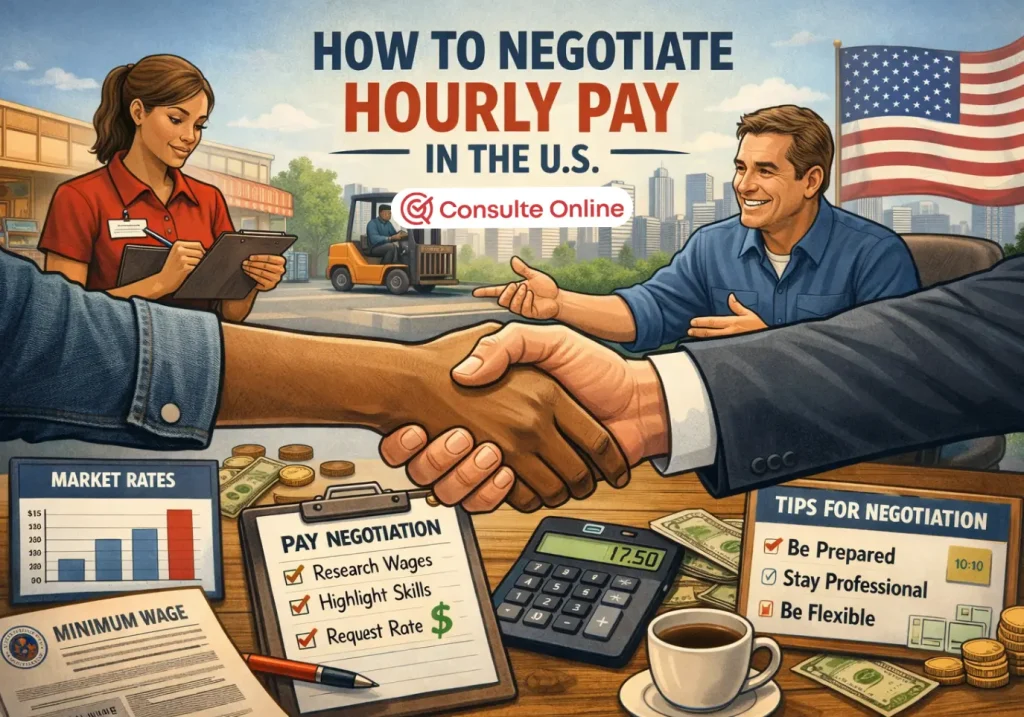
How to negotiate hourly pay in the U.S.
Hourly pay in the U.S. depends on rules, market demand, and employer budgets. So, before you negotiate, it helps to understand what usually shapes the number on the offer.
What “hourly pay” can include
In many jobs, your real compensation is not only the base rate. It can also include other parts, which means you may negotiate more than one item.
- Base hourly rate
- Overtime opportunities
- Shift differentials (night, weekend, holiday)
- Tips (for tipped roles)
- Bonuses (sometimes for attendance or performance)
Because these items vary, two people with the same job title can earn different totals.
Why location changes pay so much
Pay is often tied to local labor markets. Therefore, city and state differences are normal.
- Cost of living is higher in some regions
- State and city minimum wage rules differ
- Competition for workers changes by area
- Industry concentration affects demand
As a result, “average pay” only helps when you filter it by your specific location.
Why employers often expect negotiation
Many hiring managers are used to candidates asking questions about pay. So, a respectful request is usually not surprising. In fact, companies often approve offers inside a range.
What a pay range usually means
A range gives employers flexibility while still controlling costs.
- Minimum rate they can offer
- Target rate they prefer
- Maximum rate they can approve without extra steps
Therefore, if you ask for a small increase, the manager may adjust the number inside that band.
Why negotiation can be good for the employer too
Turnover is expensive. Training takes time. Scheduling disruptions create stress for the team. Because of that, paying a little more to keep a strong worker can be a smart tradeoff.
Research and prep before you negotiate
Negotiation goes better when it is structured. So, prepare first, then talk. That approach reduces anxiety and keeps the conversation professional.
Quick checklist before you ask for more
- Check typical pay for your role in your city
- Write your relevant experience, even if it’s short
- List skills that reduce training time
- Note schedule flexibility you can offer
- Decide your target hourly rate and a backup number
Because you will be nervous, having notes helps you stay clear and consistent.
What to highlight if you have limited experience
Even entry-level applicants can show value. However, you must translate it into what employers care about.
- Reliability and punctuality
- Customer service ability
- Willingness to learn quickly
- Safety awareness and attention to detail
- Ability to handle busy shifts
Therefore, you are not “negotiating with nothing.” You are negotiating with proof of readiness.
How to negotiate hourly pay during hiring
The best time to negotiate is usually after you receive the offer. At that point, the employer has already decided they want you. Therefore, your request is more likely to be considered.
A simple negotiation script that sounds natural
Use short sentences. Keep a calm tone. Stay respectful.
- Thank them for the offer
- Confirm the rate
- Ask if there is flexibility
- Support your request with a reason
Example you can adapt:
“I really appreciate the offer. I’m excited about the role. The rate is $X/hour. Based on my experience and local market pay, is there room to adjust closer to $Y/hour?”
This works because it is direct, but not confrontational.
If they ask your expectations too early
Sometimes employers ask about pay before an offer. In that case, a range is safer.
- Give a realistic range
- Mention it depends on schedule, duties, and benefits
- Show flexibility while protecting your value
For example:
“I’m looking for something in the $X to $Y range, depending on the responsibilities and the schedule.”
Words and phrases that improve your chances
Language matters. Tone matters. Therefore, keep the conversation professional and collaborative.
Phrases that feel respectful and confident
- “Based on my experience…”
- “From what I’ve seen in local market rates…”
- “I’m hoping we can find a rate that matches the role…”
- “Is there flexibility in the offer?”
- “What would it take to reach $X/hour?”
These phrases invite discussion instead of pressure.
What to avoid
- Threats or ultimatums
- Emotional statements about bills or personal problems
- Comparisons to coworkers
- Overexplaining for too long
Instead, keep it short and factual. That usually works better.
How to negotiate hourly pay after you are already hired
If you are already working, negotiation is still possible. However, timing and proof matter more.
Best moments to ask
- During performance reviews
- After you take on new tasks
- When your responsibilities expand
- When you improve speed, accuracy, or reliability
- When you cover difficult shifts consistently
Because the employer already knows you, results become your strongest argument.
How to document your value quickly
Keep it simple. Track facts.
- Attendance record
- Training completed
- Positive customer feedback
- Speed or productivity improvements
- Extra responsibilities handled without supervision
Then, turn that into a clear request.
How to negotiate hourly pay if they say no
A “no” is not always final. Sometimes it means “not right now.” Therefore, ask follow-up questions that create a path forward.
Smart follow-up questions
- “When can we revisit this?”
- “What performance goals would support a raise?”
- “Is there a raise cycle I should plan for?”
- “Are there other ways to increase earnings, like more hours or different shifts?”
This keeps the conversation productive and future-focused.
Other items you may negotiate
If the base rate cannot change, other items sometimes can.
- More stable schedule
- More hours
- Better shifts
- Training for higher-paying tasks
- A review in 30 to 90 days
So, you still may improve your outcome.
Common mistakes that reduce your leverage
Mistakes happen when people negotiate without structure. So, use this quick list to avoid the most common issues.
Avoid these errors
- Negotiating without researching local pay
- Asking for a number that is far outside the market
- Talking too much and losing the main point
- Accepting immediately under pressure
- Sounding frustrated or impatient
Instead, stay calm, stay clear, and keep the discussion professional.
Minimum wage, overtime, and basic protections
Knowing your rights helps you negotiate and protects you from underpayment. However, this article is informational and not legal advice. Still, understanding basics is useful.
Key points to know
- Minimum wage rules can differ by state and city
- Overtime eligibility depends on classification and hours worked
- Tipped roles follow special wage rules
- Misclassification can affect pay and overtime
Therefore, when something feels unclear, ask for clarification in writing.
How to negotiate hourly pay with confidence over time
Confidence is built through repetition. So, every pay conversation teaches you something, even if you do not get the exact result you wanted.
Small habits that help
- Practice your script out loud
- Keep your request short
- Use facts, not emotions
- Ask for next steps if the answer is no
- Review your pay every time duties change
Over time, negotiation becomes a normal skill, not a stressful event.
Conclusion: A realistic plan for better hourly pay
When you learn how to negotiate hourly pay, you give yourself more control over your income. Preparation makes the biggest difference. Research, clear wording, and respectful follow-up improve outcomes.
Even if the first answer is no, the conversation can create a future path. Therefore, treat negotiation as a professional discussion, not a personal fight.
With practice, you can become calmer, clearer, and more confident. That combination often leads to better pay, better options, and better long-term stability.
Relevant Links for Further Reading
- U.S. Department of Labor – Minimum Wage
- Bureau of Labor Statistics – Occupational Employment and Wage Statistics
- U.S. Department of Labor – Overtime Pay
- USA.gov – Labor Laws and Workers’ Rights
📌 Read also:
Free Forklift Operator Certification How to Enroll in Free IT Courses Free Welding Courses in the US👉 Continue reading Consulte Online

